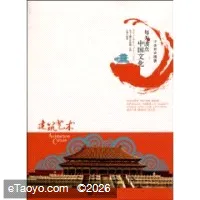
内容简介
《每天读点中国文化·建筑艺术(中英双语阅读)》内容简介:每当我们谈及中国文化的点点滴滴,青年学子们常常报之以羞赧一笑。尤其是当需要用英文介绍中国文化时,大家更是因了解不多或语言不精而难以开口。为此,我们希望这套丛书能够帮助青年学子、文化导游以及翻译工作者等通过双语阅读拓宽视野,会用恰当得体的语言介绍中国文化。也希望这套丛书能帮助越来越多的外国友人走进中国,加深对中国文化的全面了解,从而越来越欣赏和热爱这古老的文明。语言是文化的重要载体,是传播文化的媒介。语言的学习必然包含文化的学习,在语言的学习中导入中国文化是英语学习的需要,是跨文化交际的需要。
编辑推荐
《每天读点中国文化·建筑艺术(中英双语阅读)》无论您是对中国文化颇感兴趣的外国友人,还是有志于了解并推介民族文化的国内朋友,也无论您年龄的长幼,职业的分别,闲暇时,请随我们一起阅读这套以双语对照为特色的《每天读点中国文化》丛书。
风水与建筑 牌坊 吻兽 紫禁城
拉萨布达拉宫 承德避暑山庄 恒山悬空寺
西安乾陵 四川乐山大佛 大同云冈石窟
傣家竹楼 徽州民居 四合院
目录
第一部分 中国传统建筑的灵魂
中国建筑的文化精神 The CulturalSpirit of Chinese Architecture/2
中国传统观念在建筑中的体现 Architecture and Chinese Beliefs/7
儒学与建筑Confucianism inArchitecture/12
道教与建筑 Taoism in Architecture/17
佛教与建筑 Buddhism in Architecture/22
风水与建筑 Architecture and Fengshui/27
数字与建筑 Numbers in Architecture/32
第二部分 中国传统建筑的元素
中国传统建筑艺术——宫殿Palaces & Halls(Gong & Dian) /38
中国传统建筑艺术——坛廊Altars & Covered Corridors(Tan & Lang)/43
中国传统建筑艺术——亭Chinese Pavilions/48
中国传统建筑艺术——牌坊Ancient Arches(Paifang)/53
中国传统建筑艺术——石拱桥Chinese Stone Arch Bridges/58
中国传统建筑艺术——北京城门Beijing City Gates/63
中国传统建筑艺术——石狮Stone Lions/68
中国传统建筑装饰——格栅门窗Fanciful Latticework on Doors andWindows/73
中国传统建筑装饰——砖瓦Bricks and Tiles/78
中国传统建筑装饰——木雕艺术Architectural Woodcarving /83
中国传统建筑装饰——影壁和门墩Screen Wall and Gate Blocks/88
中国传统建筑装饰——吻兽Zoomorphic Ornaments /93
第三部分 中国传统名建筑
紫禁城The Forbidden City /100
黄鹤楼 The Yellow CraneTower/105
拉萨布达拉宫 Potala Palace/110
承德避暑山庄 Chengde Mountain Resort/115
北京颐和园 Summer Palace/120
苏州园林 Suzhou Gardens/125
北京天坛 Temple of Heaven/130
山东曲阜孔庙 Temple of Confucius(Kong Miao)/135
洛阳白马寺 The White Horse Temple in Luoyang/140
恒山悬空寺 The Hanging Temple of Heng Mountain/145
四川乐山大佛 Leshan Giant Buddha inSichuan/150
大同云冈石窟 Yungang Grottoes in Datong/155
北京圆明园——万园之园Yuanmingyuan in Beijing-the “Garden of Gardens”/160
北京明十三陵 Ming Ling Tombs/165
西安乾陵 Qian Ling Tomb/170
长城 The Great Wall/175
武当山古代建筑群 The Mount Wudang Ancient ArchitecturalComplex/180
南京夫子庙 Nanjing Confucius Temple/185
第四部分 中国古城与民居
丽江古镇——高原姑苏Old Town of Lijiang-Suzhou in Highland/192
乌镇——最后的枕水人家Wuzhen-the Last Resting-on-water Town in China/197
平遥——现存最完整的明清县城Pingyao-the Best-preservedAncient Ming and Qing County/202
徽州民居——最美的中国古代民居Huizhou Local Resident Houses-the Finest of Ancient Chinese Residences/207
傣家竹楼——西双版纳的风情Dai's Bamboo Houses-The Scenery of Xi shuang ban na/212
客家民居——土楼Hakka Group Houses-Earthen Buildings/217
西北民居——窑洞 Yaodong-Cave Dwellings inNortheast China/222
北京院落式民居——四合院Siheyuan-Beijing's Courtyard Houses/227
文摘
插图:
The ancient Chinese people believed that the soul was immortal and that after death people continued to live in a fashion very similar to life on earth.The burial chamber was thought to be the location Of this“life after death”.This conception gave rise to the Chinese tradition of lavish interments.The tombs of emperors ,in particular,were constructed as complete underground worlds, filled with an extensive and luxurious selection of items for the de intceased.
The human desire for good fortune and longevity finds expression in Chinese architecture.The Chinese characters for“bat”and“good fortune”are homonyms,SO the mountain in the Sum met Palace was constructed in the shape of a bat.Peaches are a metaphor for longevity,So the lake there was shaped like a peach.Together,the mountain and lake conveyed wishes for good fortune and longevity.
| ISBN | 9787561154977 |
|---|---|
| 出版社 | 大连理工大学出版社 |
| 作者 | 鲍倩 |
| 尺寸 | 16 |